


Image: Anna Shvets via Pexels
We are in denial when it comes to climate change. I know that you are well aware that climate change is currently happening, that it is human-made, and that it is our greenhouse gas emissions that are the problem. And I know that you are severely worried because climate change is, in fact, currently the biggest threat to humanity and the Earth. But you are – we are – in denial. You can quickly check yourself (and please be honest).
Test yourself: Are you in climate denial?
When you are worried about climate change, do you try to think of something else? Do you generally try not to think about climate change in your daily life? Do you even catch yourself ignoring or suppressing negative thoughts about climate change because otherwise you would go crazy?
Do you think you have to blame yourself for climate change? Do you feel guilty because you know about climate change but do not take a lot of action against it?
Do you agree that it does not make a difference if you change your behavior or not because your personal influence on climate mitigation is negligible?
If you answered the first and third questions with “yes” and the second with “no,” you are, in fact, a climate denier. The questions are part of the Climate Self-Protection Scale that Dr. Marlis Wullenkord and Prof. Dr. Gerhard Reese developed at the Department of Psychology at the University of Kaiserslautern-Landau in order to measure implicatory climate denial.
It is not about knowledge, it is about doing the right thing
When we think of climate denial, we usually think of people claiming they do not believe in climate change, that it is not happening, or that global warming is an entirely natural process without human influence. But this is only one out of three different types of denial that Stanley Cohen describes in his book “States of Denial: Knowing About Atrocities and Suffering”. If a fact or the knowledge of the fact is denied and it is claimed that something did not happen or is simply not true, it is called literal denial. Acknowledging a fact but attributing a meaning different from what seems apparent to others is called interpretive denial. This is done by changing words, using euphemisms, or employing technical jargon – for example, using the term “climate alarmists” and claiming climate change is not that bad.
If a fact and its conventional interpretation are acknowledged but its psychological, political, or moral implications are denied or minimized, it is called implicatory denial, which is our case: We know climate change is happening and that it currently poses the greatest threat to our Earth system, and we know that we can limit global warming by reducing our greenhouse gas emissions, but we do not take (enough) action. We deny our moral responsibility for climate mitigation. Implicatory denial refers to not doing the “right” thing that conventionally follows from the knowledge.
Realizing that there is a gap between what we know and what we do can make us feel very uncomfortable because we recognize a dissonance between the sense of who we are and what our behavior reflects about us. Falling into denial is a pretty common response because it can dissolve this so-called cognitive dissonance.
Justifications, avoidance, and rationalizations are strategies we use to cope with helplessness, frustration, or guilt that can follow from acknowledging climate change as a severe threat. But implicatory denial is a bad coping mechanism since initial climate-emotions like sadness, anger, or fear want us to seek ways out of the crisis (see the work from the team around the psychologists Jessica Meininger and Lea Dohm).
We decide whether we want to support business as usual
Now you might counter that there is no way to blame individuals, since our own individual contribution to the total global greenhouse gas emissions is, in fact, close to zero and that it is politics and industries that are responsible for climate mitigation. And I agree with that — at least partially.
For answering the question of who bears (how much) moral responsibility for climate mitigation, Melany Banks from the Department of Philosophy at Wilfrid Laurier University proposed an account of “reductive collective responsibility” published in The Southern Journal of Philosophy in 2013. Climate change is a collective action problem since it is cumulative greenhouse gas emissions that cause further heating of our atmosphere. Banks states that politicians bear the greatest responsibility because they are in the position with the greatest power and already exert a collective perspective on problem-solving. They set the legal framework for climate mitigation, which conditions the behavior of all actors in a collective — for example, setting a net-zero carbon dioxide emissions target. The second-greatest responsibility falls to industry. Although they need to follow the legal regulations set by the government, they determine the behavior of their employees with their company regulations — for example, setting a net-zero emissions target for the company itself or safeguarding sustainable production across the value chain beyond legal regulations.
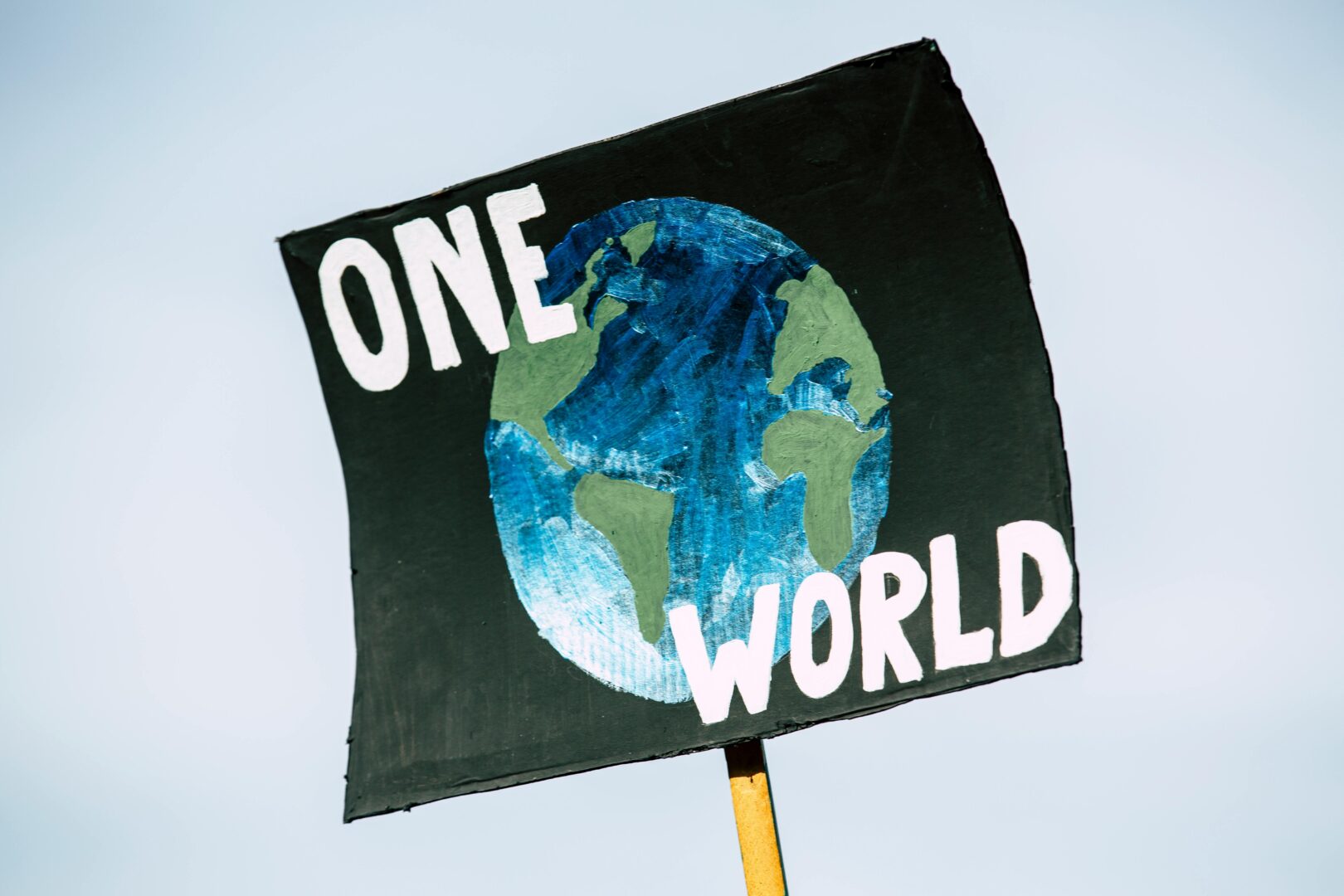
We (citizens) have the relatively smallest power according to Banks, but we have the power to influence political decision-making by using our right to vote. We have the power to influence industrial production processes and supply chains with our consumer choices. Germany, for example, records a decrease in meat production due to decreasing meat consumption, which is explained by changing dietary preferences that might be influenced by health and environmental awareness, according to preliminary data from the Federal Information Center for Agriculture. We are in the role of the supporters: To what extent do we want to support the current political and socioeconomic system?
Moreover, individual behavior indicates what behavior is socially accepted and what gets socially sanctioned. If your friends and family prefer to take short-haul flights when visiting each other or going on vacation, you would likely join their decision in order not to feel left out. But if it were common sense to take a climate-friendlier option like public transportation, people taking short-haul flights would be judged by their friends and family. Everyone who validates the collective action of emitting profligate greenhouse gases is, hence, guilty of contributing to the climate crisis.
If you are wondering what I mean by “profligate” emissions, it is that everyone has the freedom to decide to reduce any emissions that go beyond covering basic needs, since nearly everything we do emits, more or less directly, greenhouse gases. However, it can be further discussed what is understood as fulfilled basic needs. And yes, I am aware that the carbon footprint was an invention of the fossil fuel industry intended to displace responsibility onto the individual. Fossil fuel companies cannot absolve themselves of their part of the collective responsibility, but the dirty origin of the carbon footprint is no dead-end argument against individual mitigation action.
Implicatory denial can lead to delayed action
Implicatory denial has replaced literal and interpretive denial over the last decades. The two-yearly environmental awareness study carried out by the Federal Environment Agency showed that only one percent of the German population denies that climate change is happening, whereas a gap between environmental attitudes and behavior has emerged over the last years across the population: People tend to have strong environmental attitudes and to place a high importance on climate protection but still hold relatively high per capita greenhouse gas emissions. The average annual per capita emissions amount to 10.4 tons of carbon dioxide equivalents, while the goal is to reach less than one ton.
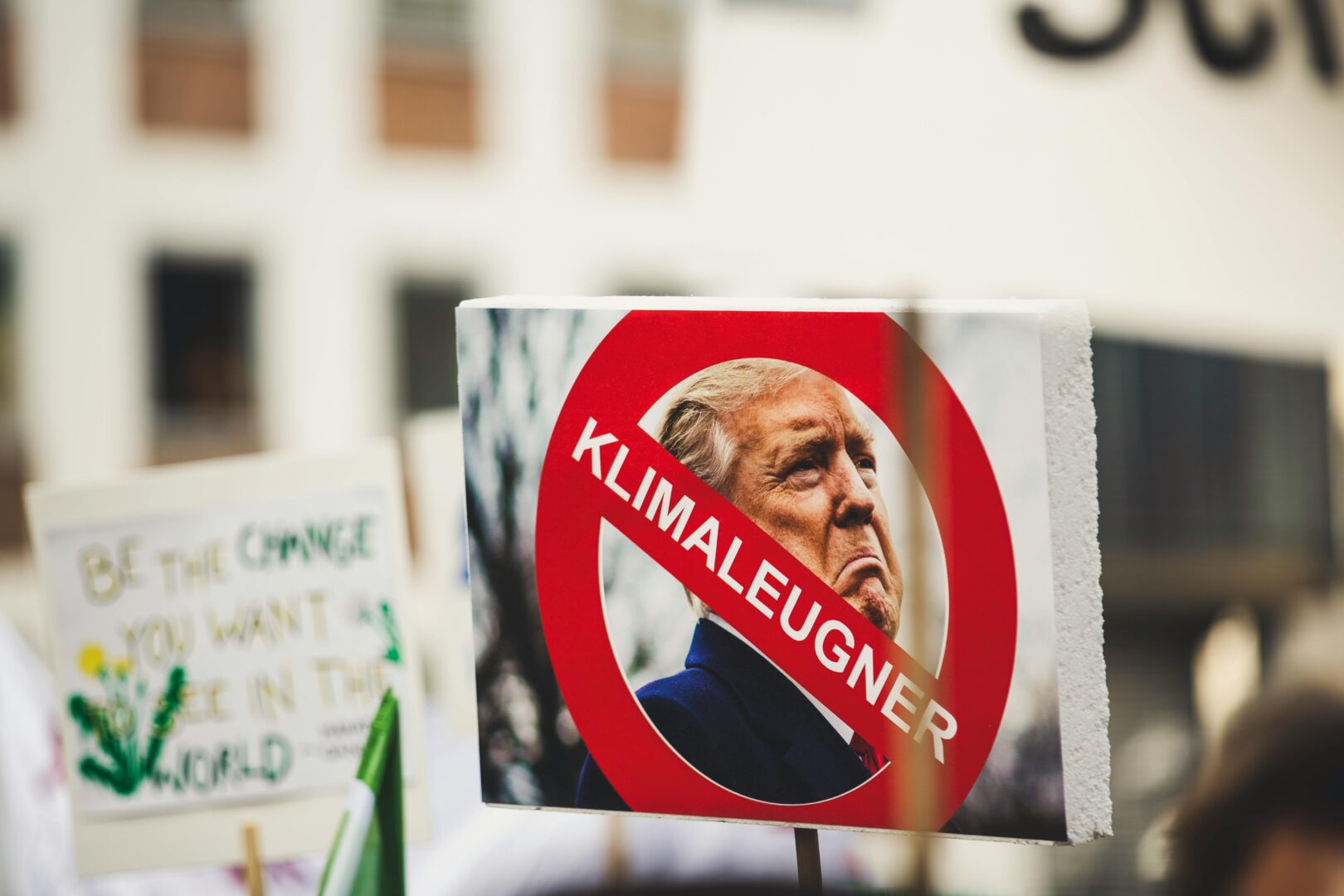
Of course, there still exist literal and interpretive climate change deniers, like U.S. president Donald Trump, who has in the mean time changed his position from not believing in climate change to acknowledging its existence but questioning human influence and challenging the consensus of climate scientists about its consequences (see for example “A Critical Review of Impacts of Greenhouse Gas Emissions on the U.S. Climate” by the U.S. Department of Energy).
The problem is that, just like literal and interpretive denial, implicatory denial can lead to delayed climate mitigation action. Denying the moral responsibility for climate mitigation can generate “discourses of climate delay” identified by the research team led by William F. Lamb. These discourses argue for minimal action or action taken by others and focus on the negative social effects of climate mitigation policies or even raise doubt about whether mitigation is still possible.
How to counter denial arguments
A common delay discourse entails displacement of responsibility or diffusion of responsibility. People use favorable comparisons with people or nation-states emitting more greenhouse gases than themselves and claim that unless those actors take action first, they are not responsible for doing so either – for example the pretty common comparison with China. The latter refers to climate change as a collective action problem in which damage can always be attributed to the behavior of others because one’s own contribution seems negligible. People claim that unless everybody takes action, it would make no difference if they changed their behavior or not.
And we all know the 2% argument, which German chancellor Friedrich Merz presented recently as an argument against mitigation action: Germany makes up about 1% of the global population and emits 2% of the total global greenhouse gas emissions, but that actually means each German emits twice as much as the average global citizen. Looking at total greenhouse gas emissions is not reliable, since we have to consider how many people live in the respective state. Comparing per capita emissions is a more suitable indicator, as well as considering historical cumulative emissions, which are significantly higher in industrialized countries of the global North. All in all, discourses that redirect responsibility set unrealistic conditions for taking action and downplay the power of collective action.
A second delay strategy is emphasizing the downsides of climate mitigation measures. It would not be desirable to protect the climate given the costs. Such discourses often highlight how policies would burden the citizens by threatening social justice or well-being. Although criticism of how we want to mitigate climate change can be valid, delay discourses deflect attention from the even greater harm climate change itself is expected to cause, which will likely increase social injustice, and deny the potential to build inclusive policies that safeguard social justice and well-being.
Another delay argumentation follows the claim that it is not even possible to mitigate climate change anymore and that an apocalyptic system collapse is already locked in. Even if it is true that current policies are ineffective in limiting global warming well below 2 °C, denying our ability to master a sustainable transformation will just evoke a paralyzing state of shock and resignation.
So, what do we do now?
It is great if you have read this far. We need to spread awareness about implicatory denial — that climate change deniers today are not only old white men leading fossil fuel lobbying against climate science, but that it can be any one of us who is severely worried about our future. Denial is a symptom of a lack of psychological resources needed to cope with the threat climate change poses to us. That is why it is important to strengthen our perceived self-efficacy.
We bear a part of the collective responsibility. We are the supporters who have the power to stop validating business as usual. Mitigating climate change is desirable because it can be compatible with well-being and prosperity if we address social justice when searching for appropriate mitigation policies. Being in denial is a pretty normal reaction, but we no longer have time to stay in this mode of resignation and to delay mitigation action. The fact that we are all guilty of accelerating the climate crisis is, in that sense, a good thing because it means we are the ones who can change it.