



By Janna Schulz
Heatwaves in Europe are becoming more frequent and extreme. Consequently, the number of heat-related deaths has been rising. A study by the Grantham Institute – Climate Change and the Environment found that deaths related to heatwaves in Europe tripled this summer. Those particularly at risk include elderly people, people with disabilities, children, and people who work outside, such as construction workers and farm labourers. Inhabitants of central and northern European countries are particularly ill-equipped to cope with the heat; air conditioning in houses and public transport is a rarity in many of those countries.
While citizens in central and northern Europe are starting to grasp the consequences of global warming, southern Europeans have been living with extreme heat for decades. And it is getting worse. A study from the NASA predicts that by 2050, several areas in Spain will be uninhabitable due to temperature increases. This summer, new heat records have been reached in southern Europe, for instance reaching 46° Celsius in El Granado in Huelva, Spain. One of these high-risk zones is the province of Almería in south-east Spain. In recent years, the province has stepped up its efforts to combat heat and adapt to climate change. It is therefore worth looking to our Spanish neighbours for inspiration on how to cope with the climate crisis and ensure the protection of citizens in high-risk zones.
The government of Almeria published a new action plan (Plan municipal contra el cambio climático) in December 2024 to protect its citizens from the consequences of the climate crisis. Part of the action plan is the creation of climate shelters (“refugios climáticos”) where people can seek refuge from the heat (inside or outside), and free water is provided. Additionally, the action plan aims to increase the number of plants and trees in the city to more than 5000, as well as to increase the installation of photovoltaic systems surrounding the city by eight.
Another of the city’s efforts is the restoration of the old water canals (“los acequias”), an ancient Arab system for transporting water through the streets and cooling the city. But not only on Municipal level are actions taken. The Andalusian citizens have been living with extreme heat for a long time and have therefore developed interesting ways to keep cool when the heat is unbearable.
We might all know the usual tips and tricks to stay cool in the summer, like closing the windows during the day and opening them during the night. At the same time, we get bombarded with the newest gadgets and tools we should buy in order to survive summer – most of them consuming a lot of energy and raw materials. So what other (more sustainable) hacks do southern Europeans have who have lot of experience living in heated zones? We asked various locals from Almeria how they deal with the heat. Here are the responses we found most inspiring:
- Walk barefoot in your house, especially if you have a stone floor – this helps the body to cool down.
- Fill a bottle with water and spray it on the skin from time to time, especially when near a ventilator – this can help to keep the body cool.
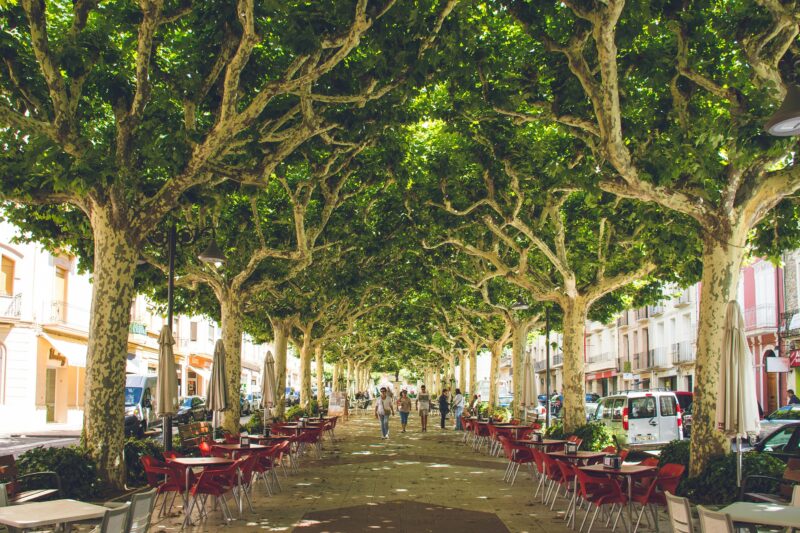
- It can be useful to have vegetation at the entrance of the house or above windows, especially vines and fig trees.
- Eating gazpacho (Olé!) with cucumber to recover mineral salts.
- Use a vase made of clay (“botijo”) – the water stays fresh for a long time, and you save space in the fridge for other things.
- Pour cool water in the street in front of your house or terrace (if you live on Floor 0), to dissipate the heat accumulated on the ground or make curtains wet and let them dry with the fan on to cool the room.
- Wear straw hats to keep the air flowing and to protect yourself from the sun.
It is a fact that summers are getting warmer in Europe. However, there are many things that our cities, as well as every single one of us, can do to avoid suffering from the immense heat. Of course, new gadgets and tools come out every day, but why not learn from the Expertise and Tradition of our Southern European neighbours? They are both more frugal in energy and cheaper.


