


Article by Carmen Pliego, Journalist, Spain
Photos by Jerneja Zavec, Journalist
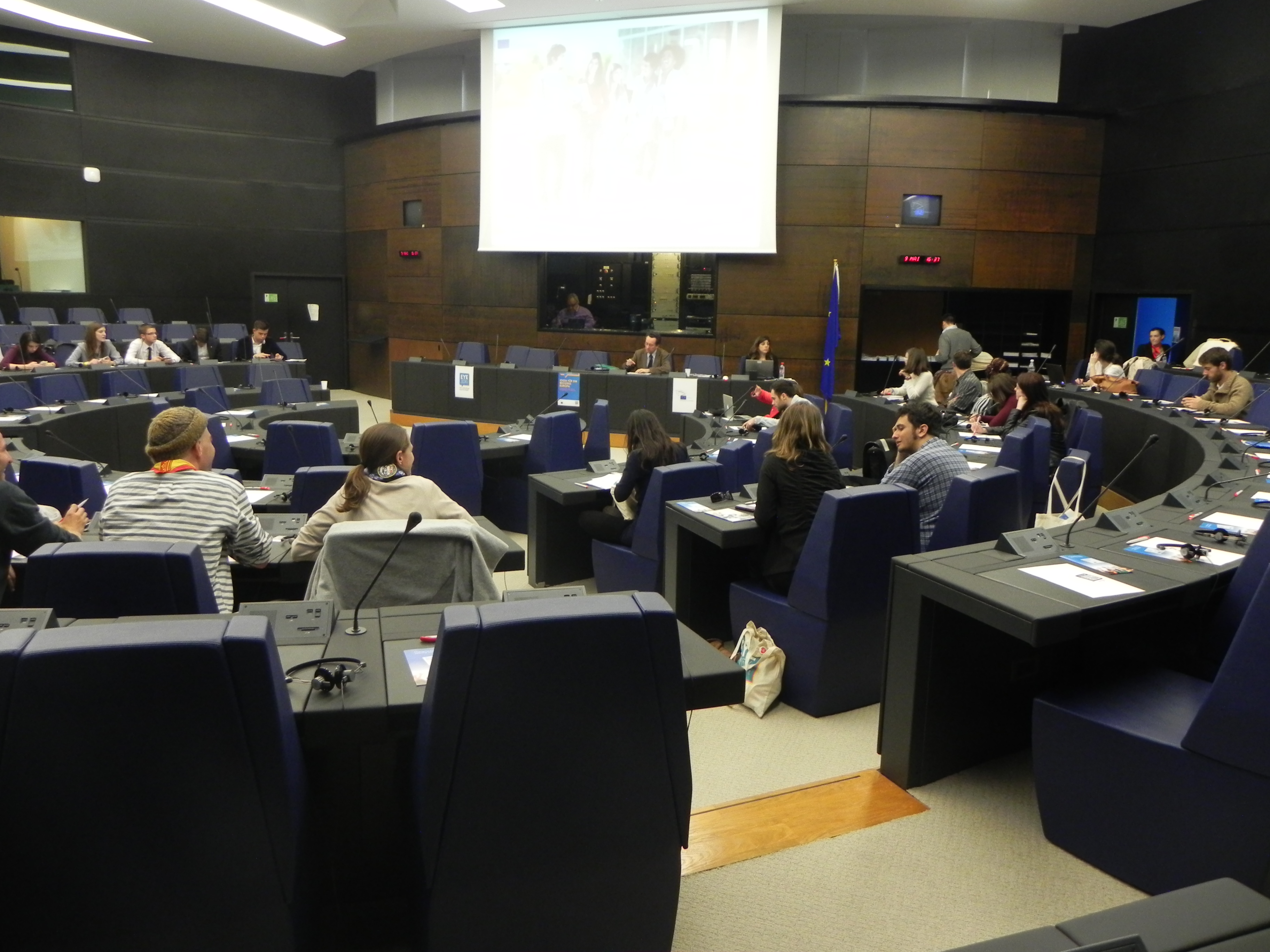
With an unemployment rate of 23,3 per cent among young people in the European Union and hundreds of qualified professionals looking for a job, experience matters and non-formal learning arises as a new way to make the difference.
This is what Pascal Lejeune, Head of Unit at Youth in Action of the European Commission thinks about the situation.
“Between two young people with the same degree, the employer will obviously choose the one who has been using his or her time to something more”, said Lejeune.
He is referring to the European Voluntary Service (EVS), a program that this year will see 10.000 European youngsters from 17 to 30 years volunteering in areas such as Social Care, Kindergarten, Culture or Environment in different European countries.
“What we have learnt from the experience of the evaluations that we organize (on the EVS program) is that the benefits that such experience provide belong to what we call the human capital, the social capital”, said Lejeune.
Participants in the EVS program usually stay for a period which may vary from 2 to 12 months in a different country while they collaborate in a voluntary basis with a non-profit organization. Apart from learning non-formal skills such as planning and organizing, communicating, and developing initiatives, they are provided with language courses in their host country.
A very valuable capital in a moment when Europe is facing its worst economic crisis and it’s leaving a whole generation of young people in disastrous working conditions.
According to a survey by Eurobarometer covering 28 member states, only half of Europeans (53%) say their working conditions are good and almost 60% said their working conditions have deteriorated in the last 5 years.
“Self-esteem, self-assurance and human capital” are just some of the benefits that participants can take from Erasmus+ program, added Lejeune.
And there are many ways to achieve them. Apart from Volunteering, participants can choose to do a Youth Exchange, a shorter mobility exchange in a foreign country available to people between 13 and 30 years, or to take part in the Structured Dialogue.
These are just some branches of the new Erasmus+, the umbrella containing all the EU’s current schemes for education, training, youth and sport, including the Lifelong Learning Programme (Erasmus, Leonardo da Vinci, Comenius, Grundtvig), Youth in Action and five international cooperation programmes (Erasmus Mundus, Tempus, Alfa, Edulink and the programme for cooperation with industrialized countries).
Erasmus+ will have a budget of €14.7 billion for the period 2014-2020 and will reach more than 4.000.000 people in the next seven years. And not only youngsters.
“It’s also a programme for teachers, educators and youth workers”, said Lejeune, who pointed out that one of its aims was “reinforcing the connection between education sector and business sector”.
Even if we won’t see the first results until 2017, when the first revision of the program is scheduled, young Europeans are optimist about it.
“Now it’s better because you can combine the programs. For example, the universities can cooperate with elementary schools and it wasn’t possible before”, said Miroslava Milickova a young graduate from Czech Republic who completed and Erasmus year in Uppsala (Sweden) and a Youth Exchange in Macedonia working in the sustainability sector.
“Because of Erasmus, I got a job in an international office so now I’m helping students to use it”, she added.
Whether Voluntary Service and Youth Exchanges will help other young people as Miroslava to find a job we cannot know, but there are some non-tangible rewards in these experiences that now will count more than ever.