Munich, the capital of Bavaria, is often associated with images of traditional German culture: royal architecture, Oktoberfest, lederhosen, and a rich historical heritage. Yet behind this familiar image lies a far more diverse and dynamic city. Home to people from more than 190 nationalities, with nearly half of its residents having a migration background, Munich has become one of Germany’s most multicultural urban centers. While Berlin is regarded as Germany’s diversity capital, Munich’s cultural landscape has also been shaped by migration. Across the city, migrant communities enrich public life through film festivals, music, visual arts, literature, language initiatives, and grassroots cultural organizations. At the same time, Munich actively promotes diversity and intercultural dialogue as core democratic values through various cultural policies and institutions. But is the city’s commitment to diversity fully put into practice? To what extent are migrant communities recognized as contributors to Munich’s cultural identity, and what barriers do they still face in gaining visibility and equal access to cultural spaces?
Through the voices and experiences of migrant organizations, artists, and cultural initiatives, this article explores how communities are preserving their heritage, building new cultural spaces, and reshaping Munich’s identity while dealing with the challenges of recognition, representation, and belonging.
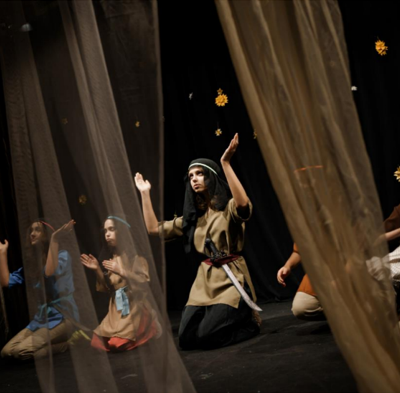
Kurdish New Year, Newroz Festival at Morgen e.V organized by KGDM, March 2026 Instagram: @KGMeunchen
Keeping Culture Alive Through Community
Munich is widely recognized for its commitment to diversity and intercultural dialogue, but the experiences of organizations such as the Kurdish Community Munich (KDGM) and Morgen e.V. reveal both the opportunities and the challenges that migrant communities face in becoming visible within the city’s cultural landscape. Founded in 2020, the Kurdish Community Munich is an organization dedicated to preserving Kurdish culture, language, and identity in Munich. Rather than focusing primarily on politics, the organization uses culture as a tool to strengthen community ties and create a sense of belonging, particularly among young Kurds who grew up in exile or without access to education in their mother tongue. Its annual Newroz celebrations, Kurdish Cultural Days, and Kurdish Film Days, alongside language courses, choir and dance groups, and youth activities, aim to reconnect younger generations with their heritage while introducing Kurdish culture to the wider public.
Culture as a Bridge to Integration
The organization emphasizes that cultural preservation and integration should go hand in hand. Their events attract not only Kurdish audiences, but also German and international visitors interested in Kurdish cinema, music, and traditions. They actively collaborate with Munich’s libraries, museums, cultural centers, universities, and political institutions, encouraging young Kurds to become active participants in the city’s cultural and civic life. At the same time, cultural activities also provide safe spaces where newcomers affected by war, displacement, and exile can rebuild social connections and heal from trauma.
The Challenge of Being Visible
Morgen Neighborhood Festival 2022 @Anastasiia Okhri
Despite these achievements, KGDM faces several structural challenges. The organization still lacks a permanent cultural center and office, forcing it to organize activities across different venues. It also argues that Kurdish cultural initiatives are often viewed through a political lens, making it harder to gain recognition as a cultural actor. Their visibility requires immense effort, better organization, and strong community networks, while the support and resources from the city are not always distributed equally among different migrant communities.
This website uses cookies to keep the site running correctly. No personal data will be stored within your session. ACCEPT
Privacy & Cookies Policy
Privacy Overview
This website uses cookies to improve your experience while you navigate through the website. Out of these cookies, the cookies that are categorized as necessary are stored on your browser as they are essential for the working of basic functionalities of the website. We also use third-party cookies that help us analyze and understand how you use this website. These cookies will be stored in your browser only with your consent. You also have the option to opt-out of these cookies. But opting out of some of these cookies may have an effect on your browsing experience.
Necessary cookies are absolutely essential for the website to function properly. This category only includes cookies that ensures basic functionalities and security features of the website. These cookies do not store any personal information.
Any cookies that may not be particularly necessary for the website to function and is used specifically to collect user personal data via analytics, ads, other embedded contents are termed as non-necessary cookies. It is mandatory to procure user consent prior to running these cookies on your website.